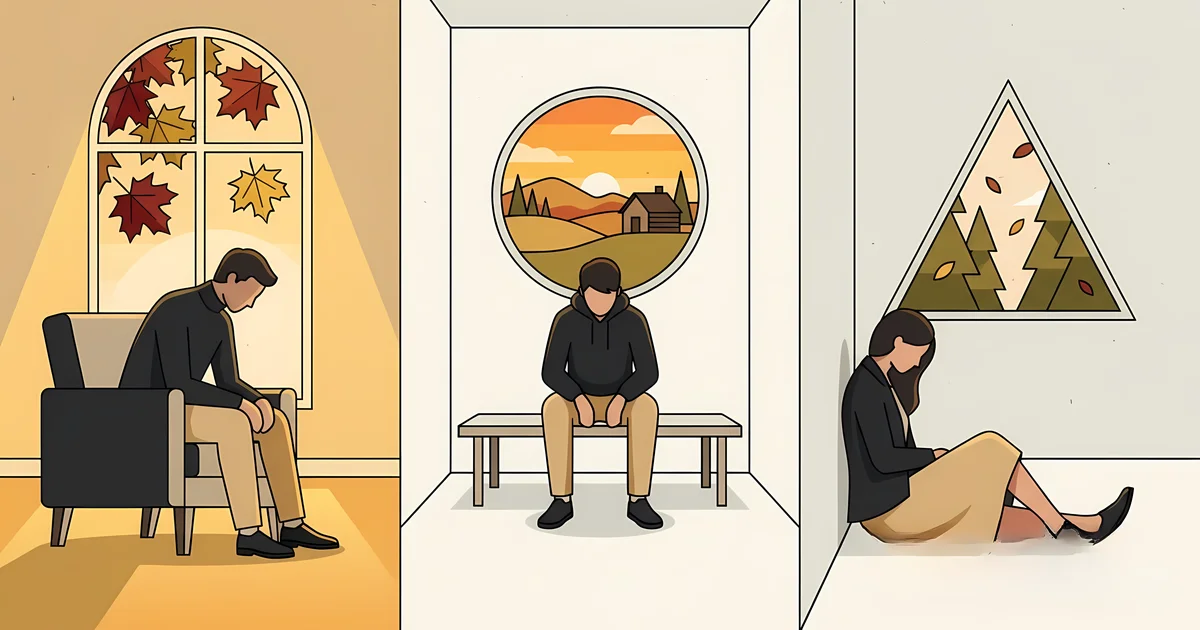
The show ends. The game closes. The feed runs out of new things to show. For hours, it was genuinely engaging — easy, entertaining, effortless. And then, almost immediately, something unexpected shows up in the quiet that follows. Not satisfaction. A faint, specific restlessness. A kind of emptiness that wasn’t there before the fun started.
This isn’t an isolated glitch. It’s one of the more universal, and more overlooked, patterns in how pleasure actually works.
Dopamine Isn’t What You Think It Is
Dopamine gets treated, in most casual conversation, as the brain’s pleasure chemical — the reward you get for doing something enjoyable.
The more accurate picture, drawn from decades of neuroscience, looks different: dopamine functions more as a signal of anticipation and pursuit than of satisfaction itself. It’s the mechanism that pushes an organism to seek, explore, and reach toward something — not necessarily the feeling of having arrived.
This distinction matters more than it might seem, because it sets up the mechanism behind that post-pleasure crash.
The Scale That Always Balances Itself
In the 1970s, psychologists Richard Solomon and John Corbit proposed what’s now called opponent-process theory: every strong emotional state (what they called State A) automatically triggers an opposing reaction (State B), as the nervous system works to maintain balance.
A surge of pleasure tips an internal scale toward one side; almost immediately, the brain begins applying a counterweight in the other direction, to keep the system from staying overstimulated.
The crucial detail is in the timing. When the source of pleasure stops — the video ends, the sugar wears off, the game closes — the pull toward pleasure disappears instantly. The counterweight doesn’t. It lingers, sometimes for minutes, sometimes for hours, pressing the scale down past neutral before it eventually settles back to baseline.
That lag is what produces the flat, hollow feeling after something enjoyable ends. It isn’t a sign that something’s missing from your life. It’s closer to the lagging half of a balancing act still finishing its motion.
Why the Crash Outlasts the High
There’s some supporting evidence that pain and pleasure aren’t as separate, neurologically, as they feel. Research on reward circuitry — including work showing that relief from pain activates the same mesolimbic dopamine pathway involved in food, drugs, and other primary rewards — points toward overlapping rather than separate systems.
It’s worth noting that a good portion of the most precise, mechanistic evidence here comes from animal research rather than direct human studies, but the overall picture — that pain and pleasure draw on shared neural circuitry rather than entirely separate ones — is consistent across multiple lines of research.
When Modern Life Overloads the Scale
Most of human history didn’t offer constant access to intense, on-demand pleasure. Modern life does — endless video feeds, hyper-palatable food, notifications delivered the instant they’re generated.
Repeated exposure to this kind of high-intensity stimulation triggers a process called neuroadaptation: the brain, trying to protect itself from constant overstimulation, gradually reduces its sensitivity to reward signals. At the same time, the compensatory counterweight on the pain side tends to grow heavier and stick around longer.
The effect compounds over time. Activities that once delivered real joy start delivering only enough relief to offset the discomfort of not having them — less a source of pleasure, more a way of avoiding withdrawal. It functions a bit like a loan against future mood: the immediate payoff is real, but it comes with interest, paid later in the form of a lower baseline.
Tipping the Scale the Other Way
Here’s the part that reframes the whole picture: the same mechanism runs in reverse, and it can be used deliberately.
Consider what happens during a long, demanding run. Physically, the body is under real strain — elevated heart rate, muscular fatigue, sustained discomfort. The scale tips hard toward the pain side. But as the run ends, the compensatory mechanism kicks in, pushing back the other direction — producing what’s commonly known as the runner’s high, a sustained rise in endogenous opioids and dopamine that persists well after the exertion stops.
Cold-water immersion follows a similar pattern. Stepping into cold water triggers an immediate, uncomfortable spike in stress hormones. But once the person steps out and warms up, that initial stress response fades, leaving behind a documented, sustained elevation in baseline dopamine that can last for hours.
In both cases, deliberately tipping the scale toward discomfort first produces a genuine compensatory lift afterward — one that tends to feel more durable than the version chased directly through easy pleasure.
The Old Idea Behind the New Science
None of this is a new discovery dressed up in modern language. The Stoic philosophers Seneca and Marcus Aurelius practiced voluntary discomfort — simple food, harsh weather, physical exertion — not as self-punishment, but because they recognized, in their own terms, something close to this same mechanism: a life sheltered from all discomfort produces a fragile mind, while deliberately tolerating mild hardship tends to build something closer to lasting steadiness.
Three Ways to Work With the Scale
Pay the price upfront
Before reaching for high-dopamine leisure — a show, a scroll session — do something that requires real but manageable effort first: a focused work block, a workout, a demanding task. Tipping the scale toward mild effort beforehand tends to make the leisure that follows feel genuinely restorative, rather than just another attempt to stave off a dip.
Avoid stacking stimuli
Combining several high-intensity inputs at once — eating while scrolling while listening to something fast-paced — pushes the internal scale to a more extreme angle, which tends to trigger a correspondingly sharper compensatory dip.
Experiencing pleasures one at a time, rather than layered together, tends to keep the swing more moderate.
Let the dip pass on its own
When the familiar flat feeling shows up after something enjoyable ends, resist the reflex to immediately reach for another distraction to erase it. That dip is the balancing mechanism doing its ordinary work. Letting it run its course, rather than interrupting it with another spike, is part of what allows the system’s baseline sensitivity to recover.
The Sound of the Scale Resetting
That hollow moment after the screen goes dark isn’t a sign that something’s missing from your life, and it isn’t a cue to chase the next hit immediately. It’s the quiet, ordinary sound of an internal scale finishing its return to center.
The lasting version of good mood doesn’t come from eliminating that dip — it comes from understanding what it is, and occasionally choosing to tip the scale toward effort on purpose, rather than only ever reaching for the easy side of it.
Sources
- Solomon, R. L., & Corbit, J. D. (1974). “An Opponent-Process Theory of Motivation: I. Temporal Dynamics of Affect.” Psychological Review, 81(2), 119–145. PubMed
- Lembke, A. (2021). Dopamine Nation: Finding Balance in the Age of Indulgence. Penguin Random House
- Navratilova, E., Porreca, F., and colleagues. Research on pain relief and mesolimbic dopamine reward circuitry, primarily in animal models. PubMed — Pain relief and mesolimbic reward circuitry
- Olds, J., & Milner, P. (1954). “Positive Reinforcement Produced by Electrical Stimulation of Septal Area and Other Regions of Rat Brain.” PubMed
- General research on the neurobiology of the “runner’s high,” particularly exercise-induced endocannabinoid signaling. PubMed — Runner’s High Review
- Research on cold-water immersion and acute catecholamine responses. PubMed — Cold-water immersion research
- Seneca, Letters from a Stoic; Marcus Aurelius, Meditations — classical Stoic texts discussing voluntary discomfort and self-discipline. MIT Classics — Meditations
FAQ
Is the “crash” after pleasure a sign something’s wrong with me?
No — it appears to be a normal, predictable neurochemical pattern (opponent-process response), not a personal or psychological problem.
Does this mean I should avoid pleasurable activities?
Not necessarily — the issue is more about intensity, frequency, and stacking multiple high-intensity inputs at once, not pleasure itself.
Why does a hard workout leave me feeling better than a relaxing binge-watch?
Both trigger the same balancing mechanism, but in opposite directions — the workout tips the scale toward discomfort first, producing a genuine compensatory lift afterward, while passive high-stimulation activities tip it toward pleasure first, leaving a compensatory dip behind.
Is dopamine detoxing a real, scientifically supported practice?
The idea of literally clearing dopamine from the brain isn’t accurate — dopamine is essential for basic motor function and attention. What’s more supported is reducing high-intensity stimulation temporarily to let sensitivity recover, which is a more modest and accurate version of the popular idea.